Stress Management Techniques: Evidence-Based Strategies for Everyday Resilience
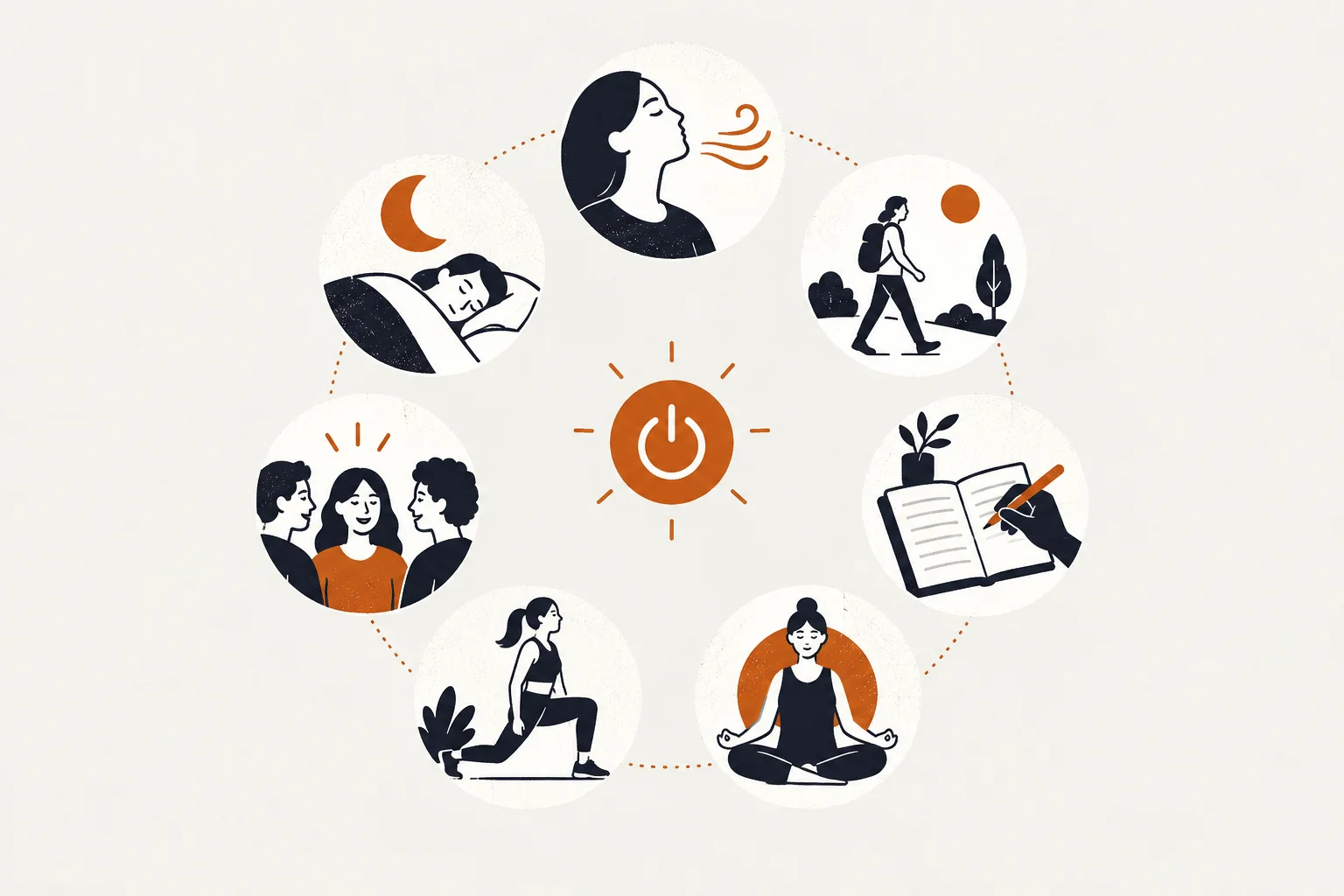
Stress is unavoidable, but chronic stress is not. These techniques address different types of stress responses so you can choose what works for your situation.
Understanding Stress Responses
Stress triggers a coordinated physiological response: cortisol and adrenaline release, increased heart rate, redirected blood flow to muscles, and heightened alertness. This response served humans well against physical threats. Modern stressors — deadlines, relationships, financial pressure — activate the same system without physical resolution, leaving stress hormones circulating unnecessarily.
Effective stress management addresses both the immediate response and the underlying patterns that create chronic stress. Different techniques work better for acute moments versus long-term resilience building.
Immediate Stress Relief Techniques
The 3-3-3 Rule — Name three things you see, three sounds you hear, and move three body parts. This grounding technique interrupts the stress response by engaging the prefrontal cortex, pulling attention away from threat perception and back to the present moment. It works within minutes and requires no equipment.
Box breathing — Inhale for four counts, hold for four, exhale for four, hold for four. This breathing pattern stimulates the vagus nerve, activating the parasympathetic nervous system and counteracting the stress response. Four to six cycles can noticeably reduce physiological arousal within two minutes.
Progressive muscle relaxation — Tense each muscle group for five seconds, then release for ten seconds. Working from feet to forehead, this technique reveals tension you weren’t aware you were holding and teaches your body the difference between tense and relaxed states. Useful before sleep or during stressful work periods.
Cold water exposure — Splashing cold water on your face or holding an ice pack to your wrists triggers the mammalian dive reflex, which immediately slows heart rate. This physiological response cannot be consciously controlled, making it reliable when anxiety feels unmanageable.
Daily Practices for Stress Resilience
Mindfulness meditation — Regular mindfulness practice changes how the brain processes stress. Studies show eight weeks of daily meditation reduces amygdala reactivity to threatening stimuli and increases prefrontal cortex activity associated with emotional regulation. Even ten minutes daily produces measurable changes in stress response patterns.
Physical exercise — Exercise metabolizes stress hormones and produces endorphins that counteract negative mood. Activities combining rhythmic movement with breath awareness — walking, swimming, yoga — are particularly effective. Aim for 150 minutes of moderate exercise weekly, spread across at least three days.
Nature exposure — Time in natural settings reduces cortisol levels, blood pressure, and sympathetic nervous system activity. Twenty minutes in a park produces measurable stress reduction compared to equivalent time in urban environments. Regular nature exposure builds baseline resilience to daily stressors.
Social connection — Positive social interaction releases oxytocin, which counteracts stress hormone effects. Meaningful conversation, even brief, activates the calming social engagement system. Isolation amplifies stress responses; connection buffers them.
Cognitive Techniques for Chronic Stress
Cognitive restructuring — Stress often stems from perceived threats that exceed actual resources. Identifying and challenging catastrophic thinking patterns reduces unnecessary stress activation. Ask: What evidence supports this worry? What’s the realistic worst case? What would I tell a friend in this situation?
Values clarification — Much chronic stress comes from misalignment between daily actions and core values. Clarifying what matters most helps prioritize stressors and release attachment to outcomes outside your control. This doesn’t eliminate stress but makes it more manageable.
Acceptance practices — Some stressors cannot be changed — illness, loss, systemic challenges. Acceptance doesn’t mean resignation; it means redirecting energy from impossible battles toward meaningful action within your sphere of influence. Dialectical behavior therapy skills teach this balance explicitly.
Building a Personal Stress Toolkit
No single technique works for every situation. Build a toolkit containing:
One immediate technique for acute stress (breathing, grounding, cold exposure)
One daily practice for baseline resilience (exercise, meditation, nature time)
One cognitive technique for recurring stress patterns (restructuring, values work, acceptance)
One social resource for connection during hard periods
Rotate through your toolkit based on the stress type and available time. Acute workplace stress might need three minutes of box breathing. Evening anxiety might benefit from progressive relaxation. Ongoing life stress might require cognitive work and social support.
When Stress Management Isn’t Enough
Techniques help most people manage stress effectively. Professional support is appropriate when:
- Stress produces persistent anxiety or depression symptoms
- Coping strategies fail to reduce distress despite consistent use
- Stress interferes with relationships, work, or daily functioning
- You use substances to manage stress
- Stress triggers panic attacks or physical symptoms
Therapy provides structured approaches like CBT, ACT, and trauma-informed care that address stress at deeper levels than self-management techniques.
For targeted approaches, see our guides on grounding techniques for stress, teenage stress management, and workplace stress techniques.