Best Self-Help Books for Anxiety and Overthinking: A Curated Guide
Disclosure: As an Amazon Associate I earn from qualifying purchases. This article contains affiliate links; if you buy through them, we may earn a commission at no extra cost to you.
Anxiety and overthinking often travel together. These books address both — helping you calm your mind and quiet the mental chatter.
Why Anxiety and Overthinking Are Connected
Anxiety and overthinking share a neural pathway. When your brain perceives threat, it doesn’t just trigger a physical response — it starts generating scenarios. What if this happens? What if that goes wrong? What if I’m not prepared?
This is overthinking: your brain’s attempt to solve problems that don’t exist yet. It feels productive, but it’s actually paralysis disguised as preparation.
The overlap is so common that many self-help books address both. This guide covers the best ones — books that don’t just calm your anxiety but give you tools to interrupt the overthinking cycle.
1. Brain Off Switch: 100 Ways to End Overthinking, Ease Stress, Escape Negative Loops, Clear Your Mind and Stay Present
Best for: Beginners who want practical, actionable techniques
Our own book, Brain Off Switch: 100 Ways to End Overthinking, Ease Stress, Escape Negative Loops, Clear Your Mind and Stay Present, was written specifically for this intersection. We tested over 100 techniques that target both anxiety and overthinking, organized by situation:
- Morning overthinkers: Techniques for starting the day without the mental clutter
- Work anxiety: How to stay focused when your mind is racing
- Social overthinking: Breaking the cycle of replaying conversations
- Nighttime anxiety: Strategies for quieting your mind before sleep
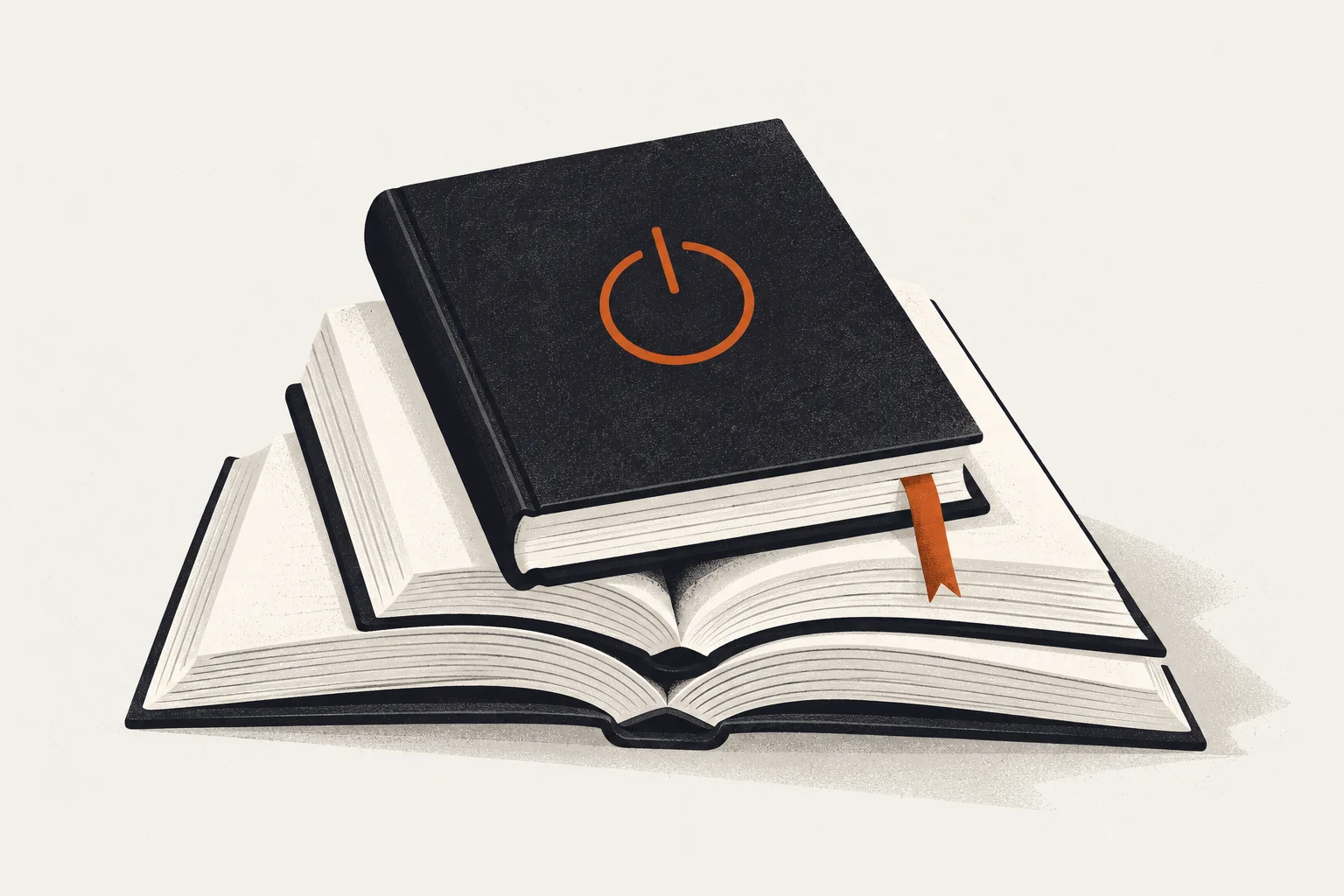
The book uses a “power-off” metaphor — the idea that you can consciously choose to stop the mental loop, just like flipping a switch. Each technique includes a brief explanation of why it works (the science) and exactly how to do it (the practice).
Where to find it: Brain Off Switch: 100 Ways to End Overthinking, Ease Stress, Escape Negative Loops, Clear Your Mind and Stay Present
2. The Anxiety and Worry Workbook by David Burns
Best for: People who want a structured, CBT-based approach
David Burns is one of the most respected voices in cognitive behavioral therapy. His workbook takes a systematic approach to anxiety and worry, teaching you to identify and challenge the thought patterns that fuel both.
Key techniques include:
– The downward arrow technique (tracing worry to its root belief)
– Cost-benefit analysis of worrying
– Behavioral experiments to test anxious predictions
Burns’ approach is evidence-based and thorough. If you’re the type who wants to understand the “why” before the “how,” this is your book.
Where to find it: Amazon
3. Don’t Let the Lion Sleep Tonight by Alan Aldridge
Best for: People who want a compassionate, trauma-informed approach
This book reframes anxiety not as a disorder to fix but as a protective system that’s been overactivated. Aldridge’s approach is gentle but effective, focusing on building safety in the body rather than fighting the anxiety.
The “lion” in the title refers to the primitive part of your brain that triggers fear responses. Instead of trying to kill the lion, you learn to calm it — and in doing so, reduce both anxiety and the overthinking that feeds it.
Where to find it: Amazon
4. The Happiness Trap by Russ Harris
Best for: People ready to challenge their relationship with anxious thoughts
Harris draws on Acceptance and Commitment Therapy (ACT) to teach a different approach: instead of trying to control or eliminate anxious thoughts, you learn to make room for them while still living according to your values.
The core insight: overthinking often comes from trying to solve unanswerable questions (“What if?” “Why do I feel this way?”). ACT gives you tools to step back from the thinking itself and choose your actions based on what matters to you.
Where to find it: Amazon
5. Mind Over Mood by Greenberger and Padesky
Best for: People who want a comprehensive, workbook-style resource
This classic has been updated through multiple editions and remains one of the most thorough CBT workbooks available. It covers both anxiety and rumination (the persistent, repetitive thinking that characterizes overthinking).
The book is organized by symptom cluster, so you can focus on the areas that matter most to you. It includes worksheets, examples, and homework assignments that reinforce the techniques.
Where to find it: Amazon
6. The Height of Anxiety by David Veale and Robin Willson
Best for: People who want to understand anxiety from a neuroscience perspective
This book explains the brain mechanisms behind anxiety and overthinking in accessible language. Understanding why your brain does what it does can reduce the shame and confusion that often accompany anxiety.
The authors combine clinical expertise with personal experience, making the science feel practical rather than abstract.
Where to find it: Amazon
7. Feels Like Fear by Helen Kennerley
Best for: People who have tried other approaches without success
Kennerley, a leading CBT practitioner, addresses the stubborn cases — the anxiety and overthinking that resist standard techniques. Her approach is nuanced and acknowledges that anxiety often serves a purpose, even when it’s harmful.
The book includes case studies that illustrate how different types of anxiety respond to different interventions.
Where to find it: Amazon
How to Choose the Right Book
Not every book is right for every person. Here’s a quick guide:
- Want practical techniques? Start with Brain Off Switch: 100 Ways to End Overthinking, Ease Stress, Escape Negative Loops, Clear Your Mind and Stay Present or The Anxiety and Worry Workbook
- Want to understand the science? Try The Height of Anxiety
- Want a compassionate approach? Don’t Let the Lion Sleep Tonight
- Want to change your relationship with thoughts? The Happiness Trap
- Want a comprehensive workbook? Mind Over Mood
You can read multiple books — they complement each other. Different approaches address different aspects of anxiety and overthinking.
The Common Thread: Action Over Analysis
Every book on this list shares one insight: overthinking is solved by action, not more thinking. Whether the approach is CBT, ACT, neuroscience, or compassion-focused therapy, the message is consistent.
You can think your way out of overthinking — or you can do your way out. The second option is usually faster.
The techniques in these books are designed to be practiced, not just understood. Pick one book, work through it consistently for four weeks, and evaluate the results. If it’s not working, try another. The goal isn’t to find the perfect book — it’s to find the book that helps you take action.
Key Takeaways
- Anxiety and overthinking share neural pathways — effective books address both
- Brain Off Switch: 100 Ways to End Overthinking, Ease Stress, Escape Negative Loops, Clear Your Mind and Stay Present offers 100 practical techniques organized by situation
- Burns’ workbook provides a structured CBT approach for systematic change
- ACT-based books like The Happiness Trap teach acceptance over control
- Different approaches work for different people — try what resonates
- Action beats analysis — the best book is the one you actually use
Related Reading
For more book recommendations, see our review of best books for anxiety self-help and our guide to self-help books for depression and anxiety.