DARE Book Review: A Clear Panic Method With Real Limits
Editorial rating: 8.1/10
DARE: The New Way to End Anxiety and Stop Panic Attacks gives anxious readers one memorable response to practice when fear rises. Its acceptance-and-approach message broadly fits evidence-based anxiety treatment, but the book is not a clinical protocol and should not replace assessment or individualized care.
Best for: Adults caught in a fear-of-fear cycle who want a plain-language starting framework
Key strength: Four steps that are easy to recall during a surge of anxiety
Key weakness: The book’s confident promises can sound broader than the direct evidence for the branded DARE method
Disclosure: As an Amazon Associate I earn from qualifying purchases. This article contains affiliate links; if you buy through them, we may earn a commission at no extra cost to you.
This DARE book review separates a useful idea from a tempting promise. Barry McDonagh’s method asks readers to change how they respond to anxious thoughts and sensations instead of fighting to eliminate them immediately. That principle is worth understanding. It is also important to know where a self-help book ends and professional treatment begins.
Check the current DARE paperback price and format on Amazon.
DARE at a glance
| Detail | What to know |
|---|---|
| Book | DARE: The New Way to End Anxiety and Stop Panic Attacks |
| Author | Barry McDonagh |
| Publisher and year | BMD Publishing, 2015 |
| Paperback ISBN | 978-0-9565962-5-3 |
| Length | Library records list 234 pages |
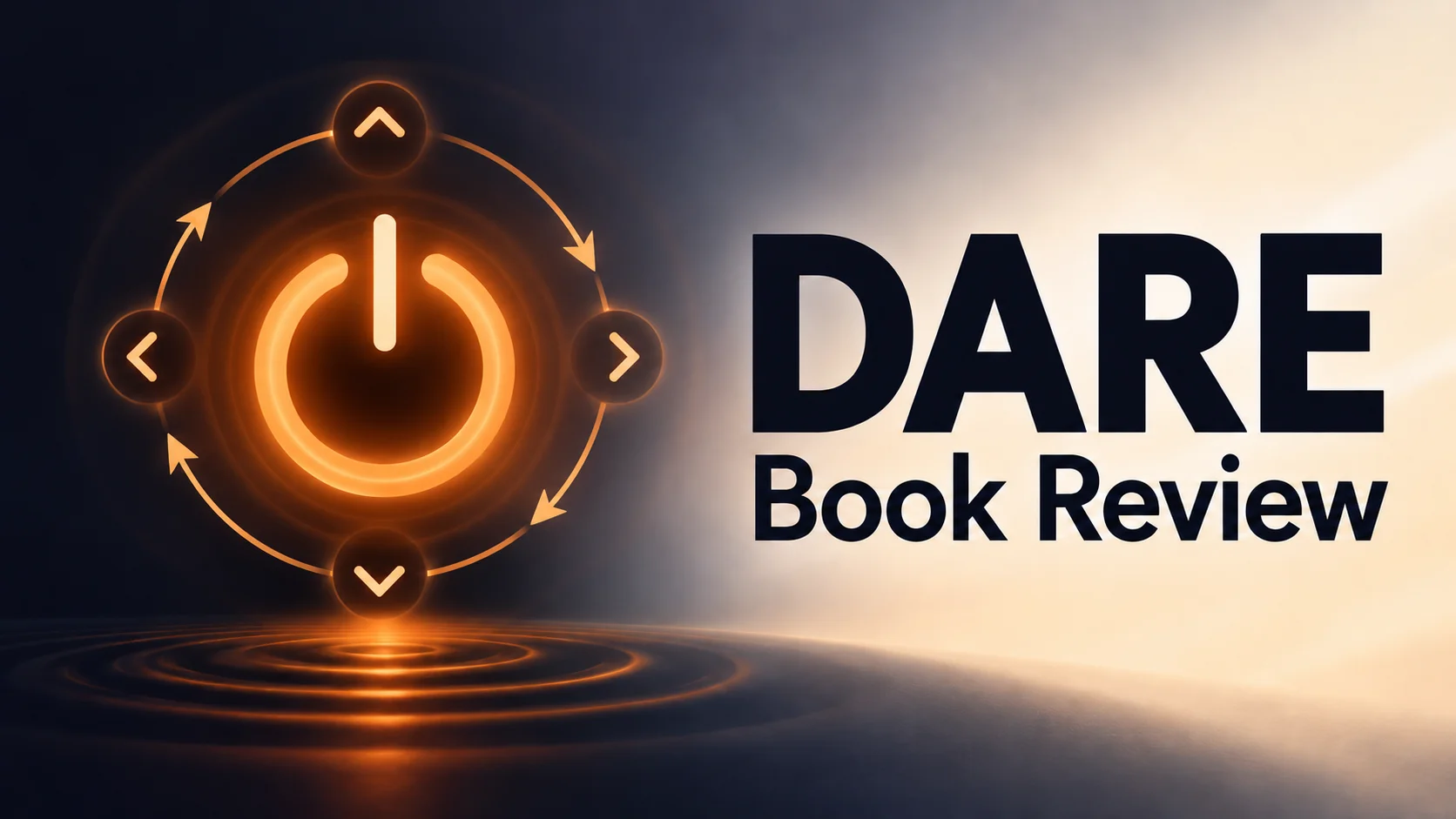
| Core method | Defuse, Allow, Run Toward, Engage |
| Main audience | Readers dealing with panic, anticipatory anxiety and avoidance |
| Our verdict | A strong entry point, best used alongside evidence-based care when symptoms are persistent or disabling |
The bibliographic details above are corroborated by a public library catalog record. The current DARE program describes the same four-step sequence on its official course page.
What the DARE method actually teaches
DARE is an acronym for Defuse, Allow, Run Toward and Engage. The sequence is designed to interrupt the second layer of fear that often follows an anxious sensation: What if this gets worse? What if I cannot handle it?
1. Defuse the alarming story
Defusing means creating distance from catastrophic thoughts rather than treating each one as a prediction. A racing heart can trigger the thought that something terrible is happening. DARE encourages a short, less defensive response instead of a long internal debate.
This is not the same as proving that every feared outcome is impossible. The practical goal is to stop feeding a thought with repeated checking, reassurance or argument.
2. Allow the sensations to be present
The second step asks readers to permit uncomfortable feelings without urgently trying to suppress them. That can sound passive, but it is closer to dropping a struggle than giving up on recovery.
This distinction matters. Trying to force anxiety away can make every sensation feel like evidence of failure. Allowing creates space to notice the experience without making immediate symptom removal the test of success.
3. Run toward the fear
“Run Toward” is the book’s most provocative instruction. It means approaching the feared sensation or situation with willingness instead of retreating into avoidance.
The idea overlaps with exposure-based treatment, where a person gradually confronts feared cues and learns that distress can change without escape. The National Institute of Mental Health identifies exposure as a common cognitive behavioral therapy (CBT) method for panic disorder. However, a clinician-guided exposure plan can be more structured and individualized than a general instruction in a book.
4. Engage with the next meaningful activity
The final step redirects attention toward ordinary life. The reader does not wait for complete calm before returning to a conversation, task, walk or other chosen activity.
This is a useful corrective to anxiety monitoring. Constantly checking whether a sensation has disappeared keeps attention locked on the alarm. Engagement makes functioning—not perfect calm—the immediate target.
How well does DARE align with anxiety evidence?
The branded four-step method does not carry the same direct research base as a complete CBT protocol. That does not make it baseless. Several of its ingredients resemble established approaches: changing responses to anxious thoughts, reducing avoidance, accepting internal discomfort and approaching feared sensations.
For panic disorder, the evidence standard is clearer than any one commercial method. NIMH describes CBT as a well-studied treatment and explains that interoceptive exposure deliberately addresses feared bodily sensations. The UK’s NICE guideline for panic disorder recommends CBT for moderate to severe presentations and recognizes structured self-help for some mild to moderate cases.
That produces a balanced conclusion:
- DARE uses concepts that are compatible with evidence-based anxiety treatment.
- Compatibility is not proof that the complete DARE package has been independently validated as a treatment protocol.
- A reader can gain a practical response from the book without treating its title as a guaranteed outcome.
If you want a more worksheet-driven program, compare DARE with our guide to the best CBT workbooks for anxiety. Our CBT vs ACT vs DBT book comparison also explains how acceptance and exposure fit into different therapeutic models.
What DARE does particularly well
It gives panic a short script
Complicated advice becomes hard to retrieve when adrenaline rises. Four verbs are easier to remember than a page of cognitive questions. DARE’s compact structure is therefore one of its genuine advantages.
It targets fear of anxiety itself
Many panic books explain symptoms but leave the reader unsure what to do in the moment. DARE focuses on the reaction that turns an initial sensation into an escalating loop.
It treats avoidance as part of the problem
Avoidance can deliver short-term relief while shrinking a person’s life. DARE repeatedly points readers back toward activities and situations they value. That makes it more behaviorally useful than reassurance-only books.
The language is accessible
The book is written for general readers rather than clinicians. A person who has abandoned technical workbooks may find this conversational framing easier to finish.
Where the book falls short
The title promises too much certainty
“End anxiety” and “stop panic attacks” are compelling claims. Recovery is rarely that uniform. Some readers improve through structured self-help, while others need therapy, medication, medical evaluation or a combination.
The method can be misapplied
Running toward fear is not a command to ignore unexplained chest pain, breathing difficulty or another possible medical emergency. New or concerning physical symptoms require appropriate medical assessment. Exposure is also safer and more effective when it is planned around a person’s diagnosis, health and level of impairment.
It is not a detailed measurement system
Readers who want worksheets, symptom tracking and graded exposure hierarchies may find DARE too loose. A workbook can make progress easier to observe and can reveal when a self-directed approach is not helping.
The evidence discussion needs careful interpretation
The book’s core principles resemble established therapies, but readers should not translate that resemblance into a claim that DARE itself is equivalent to clinician-delivered CBT.
Our rating breakdown
| Criterion | Score | Why |
|---|---|---|
| Clarity | 9/10 | The four-step response is memorable and plainly explained |
| Practicality | 8.5/10 | Readers receive an immediate framework for anxious moments |
| Evidence alignment | 7.5/10 | Several principles align with CBT, exposure and acceptance; direct method-specific evidence is less clear |
| Depth | 7/10 | Strong central idea, but less structured than a comprehensive workbook |
| Safety and limitations | 7/10 | Useful as self-help, though the marketing language can obscure who needs professional support |
| Overall | 8.1/10 | A focused, approachable starting book with important limits |
DARE compared with other anxiety books
| Book | Best for | Main approach | Choose it instead of DARE when… |
|---|---|---|---|
| The Anxiety and Phobia Workbook | Readers wanting a comprehensive program | CBT skills, exposure planning and broad self-management | You want structured worksheets and wider coverage |
| Mind Over Mood | Readers who learn through records and exercises | Cognitive formulation and behavioral experiments | You want to map thoughts, moods and actions systematically |
| The Worry Trick | Persistent hypothetical worry | Acceptance, humor and disengagement from worry | Rumination matters more than sudden panic |
| DARE | Panic and fear of anxious sensations | Acceptance plus approach | You need a memorable in-the-moment response |
For a broader shortlist, start with our best books for panic attacks. Readers who feel overloaded by too many choices may prefer our anxiety books for beginners guide.
Who should consider DARE?
DARE is most likely to suit:
- Adults who understand that their symptoms are anxiety-related but remain frightened by the sensations.
- Readers whose avoidance and anticipatory fear are reinforcing panic.
- People who prefer one repeatable method over a large workbook.
- Readers using self-help as a supplement to professional care.
It may not be the right first choice for:
- Someone with new, severe or unexplained physical symptoms.
- A reader needing diagnosis, medication guidance or a personalized treatment plan.
- Someone at risk of self-harm or unable to function safely.
- A person who wants detailed worksheets and formal progress tracking.
If choosing among many titles is the real obstacle, use our guide to selecting an anxiety self-help book. The broader self-help books for anxiety disorder hub organizes options by need and format.
How to use the book responsibly
- Read the complete explanation before testing the hardest step. A slogan is not a substitute for context.
- Choose one low-risk situation for practice. Build confidence before tackling a major fear.
- Track function, not just symptom intensity. Note whether you stayed, acted or recovered without an avoidance behavior.
- Review progress after several weeks. If distress or impairment is worsening, seek professional guidance.
- Coordinate self-help with existing treatment. Do not stop prescribed medication or therapy based on a book.
Frequently asked questions
Is DARE a CBT book?
DARE is not presented as a full CBT treatment manual. Its approach shares features with exposure and other acceptance-based strategies, but it does not replace a structured CBT protocol delivered by a qualified professional.
Can the DARE book stop panic attacks?
No book can guarantee that result for every reader. DARE may help some people respond differently to panic sensations. Persistent, worsening or disabling symptoms warrant assessment and evidence-based care.
Is DARE suitable for generalized anxiety?
The book addresses broader anxiety as well as panic. Readers dominated by constant verbal worry may prefer the more targeted approach discussed in our review of The Worry Trick once that guide is available.
Does DARE include an app or workbook?
The wider DARE program includes digital and workbook products, but they are separate from the core paperback. Check what a listing includes before purchasing.
Should I choose DARE or a CBT workbook?
Choose DARE when a compact response to panic is your priority. Choose a CBT workbook when you want assessment exercises, records, exposure hierarchies and a more structured course. Some readers can use both, provided the approaches fit their care plan.
Final verdict
DARE succeeds because it makes one demanding idea understandable: the struggle against anxiety can become part of the cycle. Defuse, Allow, Run Toward and Engage gives readers a usable way to practice a different response.
Its limitations matter just as much. The branded method is not a substitute for diagnosis, emergency evaluation or clinician-delivered treatment. The book works best as a practical entry point—or as reinforcement for a plan built with a qualified professional.
Final rating: 8.1/10. Consider it if panic and fear of bodily sensations are keeping you stuck. Choose a structured CBT workbook or professional support when you need more assessment, measurement or individualized guidance.
Health note: This review is educational and is not medical advice, diagnosis or treatment. Seek urgent medical help for symptoms that may indicate an emergency. In the United States, call or text 988 for a mental-health crisis, and call 911 for an immediate life-threatening emergency.